


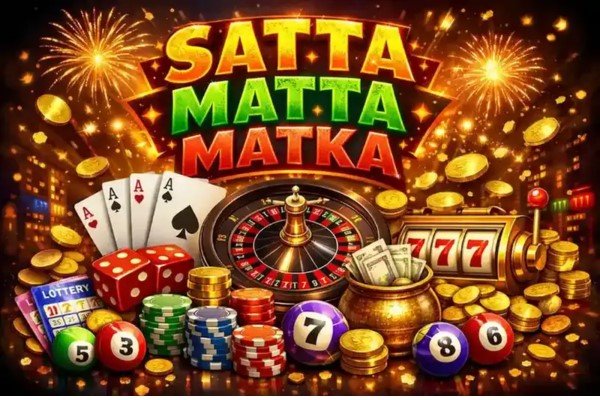
Satta Matka is one of India’s most popular gambling games, also known by names such as Rat-e-Jhat, Ankola, and Suresh Satta. Originally a legal betting game, it was later declared illegal in many parts of India. Despite legal restrictions, it continues to remain a widely played underground gambling game, attracting thousands of players due to its combination of luck, suspense, and high payouts.
At its core, Satta Matka involves predicting the next number in a sequence displayed on a Satta chart. The numbers are drawn randomly, and the outcome depends on several factors such as the number of skips, open and closing draws, and previous results.
The game’s allure lies in its unpredictability, the excitement of chance, and the potential for significant winnings, making it both thrilling and risky for enthusiasts.
Satta Matka is essentially a form of lottery betting. The term Satta translates to betting or gambling, and Matka refers to the earthen pot initially used to draw numbers randomly. The game first gained popularity in India before independence and has since evolved into one of the most well-known gambling games in the country.
Originally, Satta Matka was based on betting on cotton rates transmitted from the New York Cotton Exchange. Players would place bets on the opening and closing rates of cotton, and winnings depended on accurate predictions. Over time, the game shifted from financial markets to drawing numbers from a pot, transforming it into a chance-based gambling game. Later, playing cards were also introduced for number selection in some variants.
Some of the most famous Satta Matka markets include Kalyan Matka, Warli Matka, and Mumbai Main (Main Ratan). Each market has its own set of rules, draws, and timing, attracting players looking for different kinds of betting experiences.
Satta Matka originated in the 1950s in Mumbai, India. It began as a game based on betting on cotton rates transmitted from the New York Cotton Exchange. Players would wager on these numbers, predicting which would appear next.
In 1961, when the New York Cotton Exchange stopped transmitting cotton rates, players looked for alternatives. They began drawing numbers from a pot, which became known as the Matka. This shift marked the birth of modern Satta Matka, transforming it into one of the most popular gambling forms in India.
Over the decades, Satta Matka has evolved:
Satta Matka became not just a game of chance but a cultural phenomenon, reflecting India’s fascination with gambling and probability.
Satta Matka offers several game types, each with unique rules and payouts. Here’s a detailed overview:
| Game Type | Description |
|---|---|
| Single | Players bet on a single number between 0 and 9. The goal is to match the exact number drawn. |
| Jodi | Players bet on a pair of numbers ranging from 00 to 99. Both digits must match the winning combination. |
| Patti | Players select a three-digit number (000–999). Different payout rates apply based on the number combination. |
| Open | Bets are placed on the first digit of the winning combination, providing multiple chances to predict results. |
| Close | Similar to Open, but the bet is on the last digit of the winning combination. |
| Sangam | Combines three numbers for betting. All three numbers must match to win, increasing difficulty and reward. |
| Half Sangam | Similar to Sangam but involves only two numbers, making winning slightly easier. |
Each variant offers players the opportunity to apply their strategies, track trends, and increase the excitement and unpredictability of the game.
Satta Matka has historically been associated with specific markets, each offering its own rules, draws, and timings:
These markets are the lifeline of Satta Matka, offering platforms for intense betting, large-scale draws, and consistent engagement with players.
Playing Satta Matka involves a combination of strategy, luck, and risk management. Here’s a step-by-step guide:
⚠️ Disclaimer: Satta Matka is a gambling game. Responsible gaming practices are crucial due to inherent risks and unpredictability.
The Kalyan Chart is a historical record of Satta Matka results, primarily used for Kalyan Matka games. It consists of rows and columns representing dates, times, and results of different game types like Single, Jodi, Patti, Open, and Close.
The Kalyan Chart serves as a guide for players, helping them study patterns, analyze trends, and refine their betting strategies. However, it is not a guarantee of winning.
While Satta Matka is exciting, it carries inherent risks:
Responsible play and self-control are crucial to minimize these risks.
Beyond gambling, Satta Matka is a cultural phenomenon in India. It is deeply embedded in social networks, offering a mix of thrill, strategy, and unpredictability. Bollywood often references the game, portraying both its allure and dangers. The game reflects India’s historical fascination with chance, luck, and probability.
Here’s a detailed timeline showing the evolution of Satta Matka:
| Year | Event |
|---|---|
| 1950s | Originated in Mumbai as a betting game based on cotton rates. |
| 1961 | Transitioned to number draws from a pot (Matka). |
| 1970s | Popularity soared with the emergence of Kalyan Matka. |
| 1980s | Spread to Delhi, Kolkata, and Chennai. |
| 1990s | Physical Matka centers declined due to police crackdowns. |
| 2000s | Rise of online platforms for Satta Matka betting. |
| 2010s | Mobile apps made the game accessible nationwide. |
| 2020s | Underground and online Matka continues despite legal restrictions. |
While Satta Matka is mainly a game of chance, experienced players use certain strategies:
Note: These strategies do not guarantee wins, as the draws are random.
Satta Matka is more than just a gambling game; it is a reflection of India’s cultural and gambling heritage. From its humble beginnings in cotton markets to its online evolution, it remains a symbol of suspense, strategy, and chance.
However, it is essential to remember the risks, legal limitations, and addictive nature of gambling. Responsible play and awareness are critical for anyone interested in Satta Matka.
The game’s legacy continues to evolve, symbolizing India’s enduring relationship with luck, chance, and gambling culture.
Read More: Tiranga Game: Experience the Ultimate Fusion of Tradition and Modern Gameplay


Rerum congue dis illo ridiculus beatae nesciunt assumenda nostra. Viverra ipsum fuga, per ipsam leo sodales litora ullam assumenda ultrices.